

Introduction
Lancelot Ribeiro (1933–2010) was not just an artist; he was an innovator, a cultural bridge-builder, and a fearless experimenter. Born in Bombay and later settling in London, Ribeiro broke artistic boundaries through his pioneering use of acrylic paints, bold architectural forms, and deep spiritual undertones. His works vibrate with colour, energy, and emotion, making him one of the most distinctive voices in modern Indian art. Beyond his canvases, Ribeiro played a key role in promoting South Asian artists on the global stage, ensuring their place in contemporary art history.
Early Life and Goan Heritage
Ribeiro was born into a Goan Catholic family, and his cultural roots left a permanent mark on his art. The grandeur of Goan churches, the intricate facades of colonial architecture, and the symbolism of Catholic iconography all became recurring elements in his paintings. These influences gave his work a rich visual language—partly sacred, partly modernist.
Pioneer of Acrylic Painting
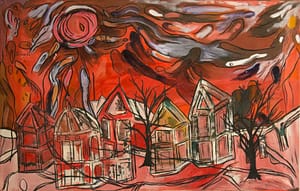
Frustrated with the slow drying and muted tones of traditional oil paints, Ribeiro turned to polyvinyl acetate (PVA)—an early form of acrylic paint. At the time, this was revolutionary. Acrylics allowed him to work faster, layer colours boldly, and achieve a brightness that oils could not match. This innovation became one of his greatest contributions to modern art.
Signature Style – Expressionism Meets Architecture
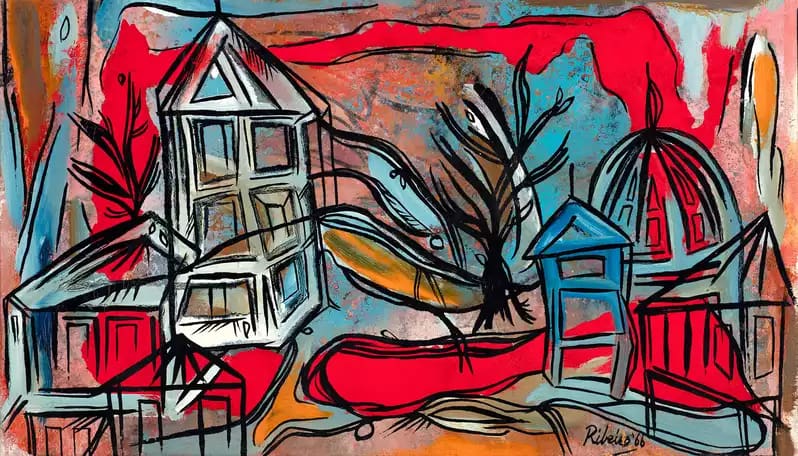
Ribeiro’s “townscapes” are among his most recognisable works. With strong, structured lines and high-contrast colours, these pieces often depict clustered buildings reminiscent of old Goan neighbourhoods or medieval European towns. His “iconic heads” series, meanwhile, carries a spiritual intensity, blending expressionism with religious portraiture.
A Creative Restlessness
Ribeiro never confined himself to one medium. He experimented with ceramics, wood sculptures, graphic art, and even poetry. This constant evolution reflected his restless creative spirit—always pushing himself to discover something new.
Champion for South Asian Artists
In 1963, Ribeiro founded the Indian Painters’ Collective (UK), later renamed Indian Artists UK (IAUK). Through this platform, he worked tirelessly to promote South Asian artists in Britain, giving them visibility in galleries, museums, and public collections.
Global Recognition and Lasting Legacy
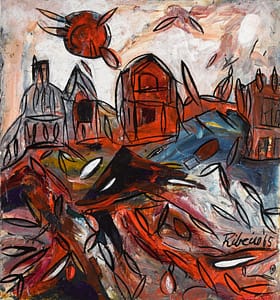
From exhibitions in Bombay to London’s most prestigious galleries, Ribeiro’s works gained international attention. Today, his paintings are part of major museum collections, and his innovations continue to inspire younger generations of artists. His vibrant colours, architectural precision, and fearless experimentation have secured his place as a true visionary of modern art.
FAQs About Lancelot Ribeiro
Q1: Why is Lancelot Ribeiro considered important in modern art?
A: He pioneered the use of acrylic paints in fine art, combined expressionist style with Goan architectural motifs, and actively promoted South Asian artists internationally.
Q2: What is Ribeiro’s most famous style?
A: His architectural “townscapes” and “iconic heads” are the most recognisable, often filled with vibrant colours and spiritual undertones.
Q3: How did Ribeiro influence other artists?
A: By introducing acrylics and creating platforms for South Asian artists, he encouraged experimentation and cultural representation in modern art.
Q4: Where can I see Ribeiro’s works today?
A: His works are held in collections like the Tate (London), the Victoria & Albert Museum, and several private collections worldwide.
Q5: Did Ribeiro work in media other than painting?
A: Yes, he also explored ceramics, wood sculptures, graphic art, and poetry.
Conclusion
Lancelot Ribeiro’s art is a celebration of colour, culture, and creativity. From his pioneering acrylic techniques to his powerful architectural imagery, he left behind not just paintings, but a vision of what modern Indian art could be. His legacy continues to inspire, reminding us that true artistry lies in innovation, passion, and the courage to stand out.